01
How does a temperature controller (water-cooled type) control the temperature of your equipment?
The refrigeration system inside the thermostat consists of four main components: compressor, condenser, expansion valve, and evaporator. Refrigerants (such as traditional refrigerant Freon) will complete one closed cycle after another in these four components, with two phase transitions occurring in each cycle.
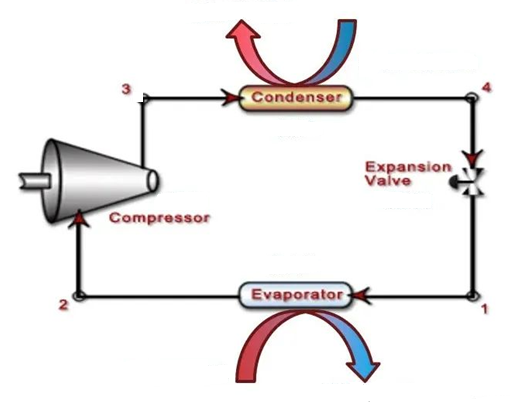
The first phase change occurs in the condenser, and cooling water needs to be introduced into the condenser of the temperature controller to cool it down, take away the heat of the high-temperature and high-pressure refrigerant gas, and turn the refrigerant gas into liquid.
The second phase change occurs in the evaporator, where the liquid refrigerant evaporates into gas after passing through the expansion valve. At the same time, it will take away the heat of the heat transfer liquid (such as water) in the bath or plate evaporator.
The cooled thermal conductive liquid will enter the external application, such as the jacket of a reaction vessel, through a circulation pump, thereby cooling the external application.
02
What is the function of cooling water (factory water)?
Throughout the entire operation of the water-cooled thermostat, we need to use cooling water to cool the condenser.
Some customers will provide qualified circulating cooling water through the factory's cooling water pipeline, also commonly known as factory water. If there is no centralized water supply on site, additional cooling water that meets the conditions needs to be provided.
03
What kind of cooling water needs to be used for condenser cooling
requirement? Is tap water okay?
Firstly, there are clear purity requirements for cooling water, otherwise it may cause blockage of the condenser and the entire circulation pipeline, leading to water leakage and ultimately causing extensive damage to the equipment.
The chloride ions in tap water can cause corrosion of the condenser and cannot be used as cooling water. Distilled water and deionized water can also corrode condensers and pipelines. In addition, if the water contains particulate impurities or has excessive hardness, it is also not suitable for use as cooling water.
Secondly, there are temperature requirements for the cooling water, and it is generally recommended to maintain the cooling water temperature at 15 ℃, or other temperatures between 10 ℃ and 25 ℃ are also acceptable.
04
How to provide cooling water if there is no factory water?
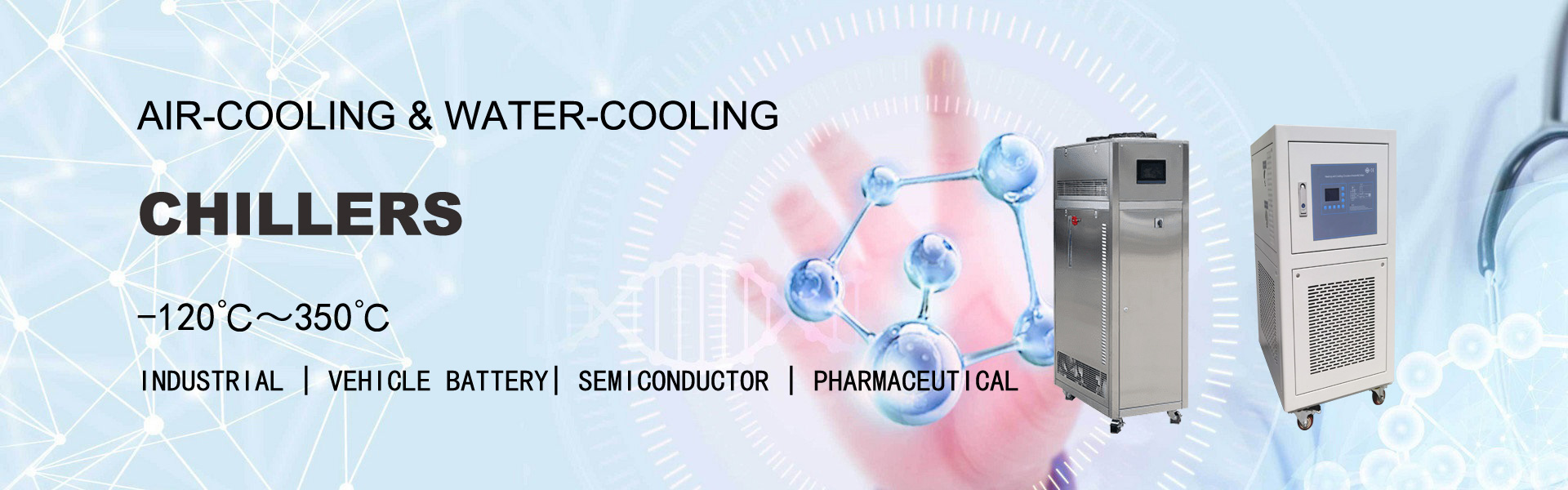
You can use Reftek chillers to provide cooling water that meets the conditions for your temperature control equipment!
Reftek chillers also have high-power models with stronger cooling capacity, and can provide temperature stable circulating cooling water for other laboratory equipment at the same time.