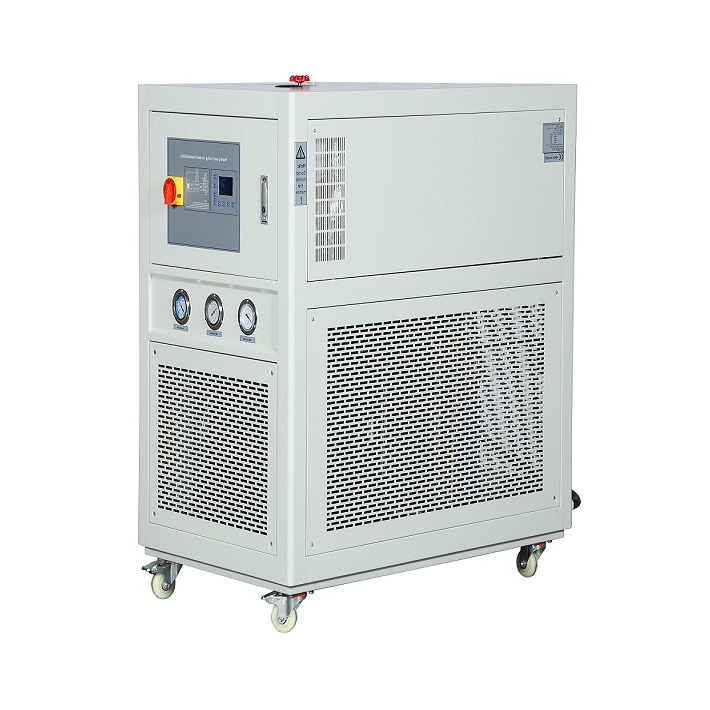
Using ethylene glycol aqueous solution for circulating refrigeration to save water resources;
Closed loop pipeline design to prevent circulating water pollution and prolong the use time of circulating water;
Cascade refrigeration technology, fast cooling speed;
Temperature control accuracy of 0.1℃, Pt100 temperature sensor, temperature control range -120℃~40℃;
Environmental temperature monitoring, power on/off delay protection;
High performance circulating pump, ensuring continuous 24-hour operation every day; Adopting efficient heat exchangers to improve heat exchange efficiency.
Application industry:
Cooling of the heating parts of laser equipment: the heating parts of laser processing and welding machines, laser generation devices, carbon dioxide laser processing machines, etc.
Cooling of the heating parts of semiconductor manufacturing equipment: locations such as monocrystalline processing equipment, printing machines, spraying equipment, ion plating equipment, etching equipment, etc.
Cooling of the heating parts of analytical and testing instruments: the light source of electron microscopes, the light source part of ICP emission spectroscopy analysis devices, the heating part of spectrophotometers, the heat source of X-ray analysis devices, the light source of atomic absorption spectrophotometers, etc. Cooling of cooling media for CNC machine tools and machining centers.
Cooling of the heating parts of machines in other industries: plasma welding, automatic packaging machines, mold cooling, plating tanks, precision grinding machines, injection molding machines, resin molding machines, etc.
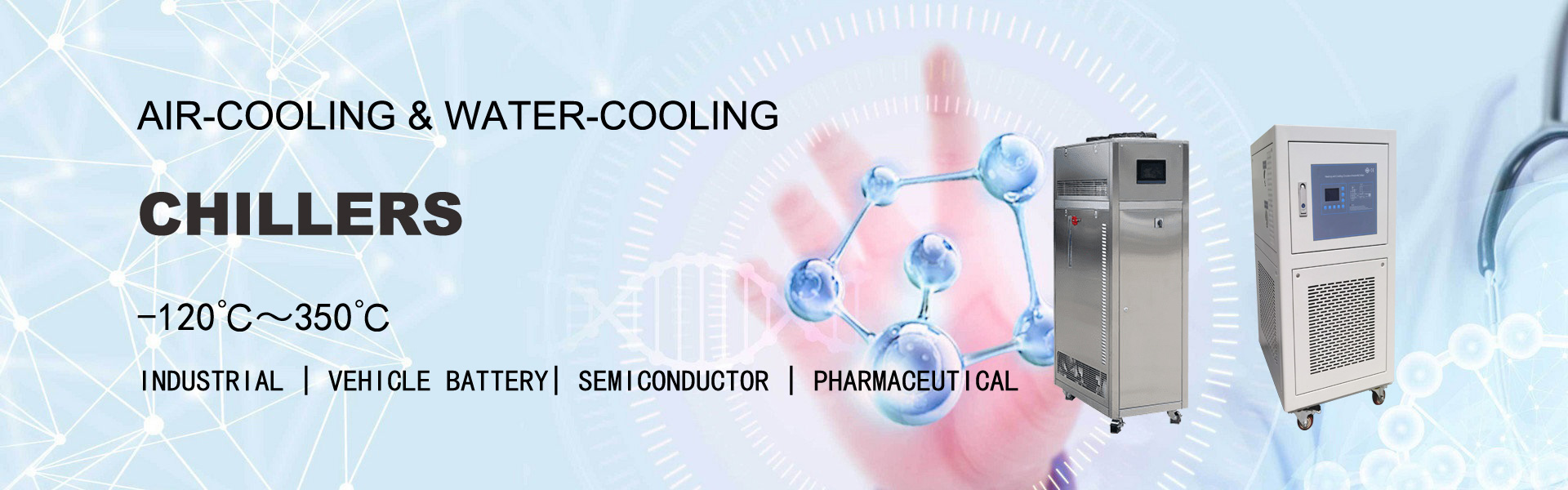
The difference between air-cooled chiller and water-cooled chiller:
1. In terms of energy efficiency, water-cooled chillers have stronger cooling effects and lower power consumption than air-cooled chillers.
2. In terms of size, air-cooled chillers are smaller in size than water-cooled chillers, and their use and maintenance are relatively simple.
3. The price of water-cooled chillers is relatively low, but a stable and suitable temperature cooling water system is required. If not available, choosing air-cooled chillers is more suitable and flexible.
Precautions for installation of chiller:
Distance between chiller and equipment: The distance between chiller and equipment should be as small as possible. This can reduce pipeline water resistance and cooling capacity loss, and if the chiller does not have remote control function, it can be easily operated.
Noise impact of chiller: The noise of chiller mainly comes from the fan, followed by the compressor and water pump. Small chillers have relatively low noise levels, generally below 68 decibels, and can be used in conventional indoor environments. If used in a quiet place, noise reduction should be considered. For air-cooled chillers above 10HP, it is recommended to install them in an outdoor environment slightly away from the working environment of personnel.
Water supply and drainage requirements: The chiller may need to supplement a certain amount of circulating water during use and maintenance, so the installation location should consider the source of automatic water supply. During equipment maintenance, circulating water may need to be discharged, so drainage issues should also be considered during installation.