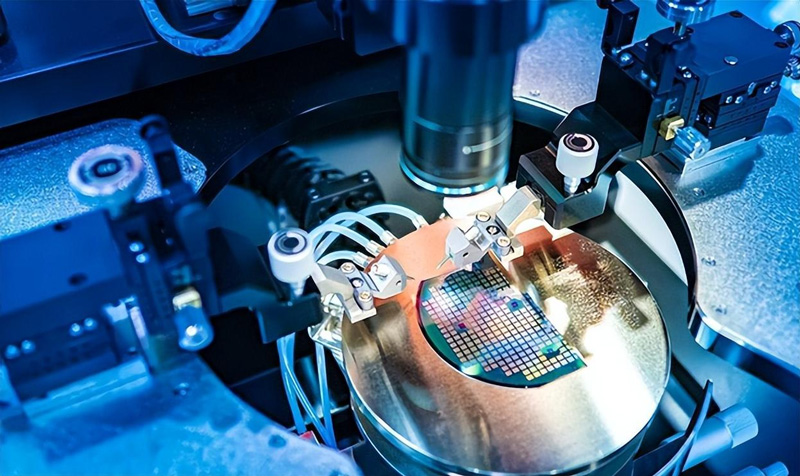
In the process of producing semiconductors and testing electronic components, there are many links that require precise temperature control. This includes processes such as plasma etching and metal organic vapor deposition (MOCVD) during semiconductor coating in the leading stages of LED production. In the semiconductor industry, other typical temperature dependence studies include stress testing in functional and load testing, environmental condition simulation, and online testing of electronic components.
Typical application areas
——Wafer manufacturing
The sliced wafer needs to be smoothed on the surface of the silicon wafer using CMP. Grinding and pumping generate heat, which needs to be eliminated by a cooler.
——Sedimentation
According to the different deposition processes, a chiller is needed for cooling or heating, and the temperature directly affects the uniformity and deposition depth of the wafer.
——Photolithography
Printing fine patterns from a mask onto a silicon wafer through light exposure requires very high stability to ensure sharp mask edges.
——Plasma etching
Wafers are processed using plasma in a vacuum etching chamber. The ions contained in the plasma bombard the wafer, thereby stripping the material. For example, the oxide layer on the silicon plate can be removed through this method. The temperature of the plasma will affect the speed and effect of etching. If the temperature is too low, the activity of the plasma will not be sufficient to effectively strip the material. If the temperature is too high, it may peel off too much material, resulting in errors and damage. Therefore, high-precision control of plasma temperature is crucial, as even small temperature changes can lead to significant changes in the size, uniformity, and shape of etched structures.
——Ion implantation
The energy of the ion source needs to be removed to ensure stable injection of mixed ions, and the cooler can meet the cooling requirements of the ion implantation machine.
——Cleaning
Cleaning equipment accounts for over 30% of the chip manufacturing process steps and requires temperature control to ensure its stable operation.
——Electroplating
Electroplating metal ions from the plating solution onto the wafer surface to form metal interconnects requires a cooling device to maintain stability and high repeatability results.
——Testing
Testing equipment runs through the integrated circuit manufacturing process (including IC design, manufacturing, and packaging testing) and requires temperature control of the equipment.